

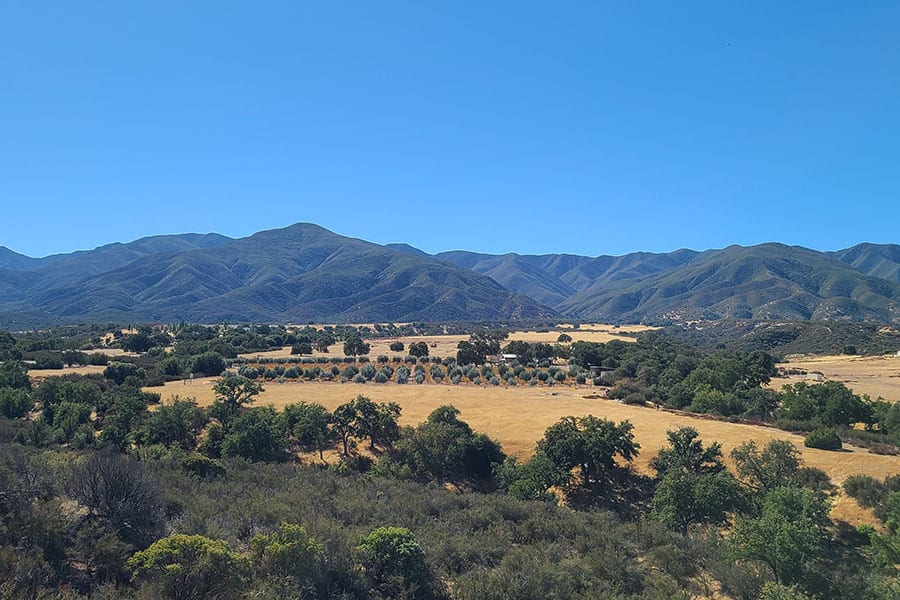
What comes to mind when you think of the Cuyama Valley? Perhaps you are called to recognize the many-colored mountainsides, or the mostly beige hues of the sprawling valley floor. Other aspects of the Cuyama Valley that Quail Springs has connected with are things like food sources and agriculture, water usage, and the health of habitat. Last year, we began work in partnership with the Santa Barbara Botanic Garden (SBBG) to address how these topics can be met with solutions.
Quail Springs joins SBBG as a sub-grantee on the Plant with Purpose grant. The grant focuses on bringing conservation to the Cuyama Valley that is accessible and equitable to the residents of this special valley. It includes working with local farmers and their needs, employing students to build career-oriented skills, bringing enriching education to the local elementary school, as well as bringing water-wise techniques and regionally grown California native plants to restore fragmented habitats. This grant comes to us and SBBG through the U.S. Department of Agriculture (USDA) and its Natural Resources Conservation Service (NRCS), which is known to also support local farmers and their needs to farm efficiently.
Our main partners in this grant work are three local farms and three community-facing locations. Of the three farms are Condor’s Hope, Cuyama Homegrown, and David Lewis’s Pistachio & Lavender farm. Each farm practices unique ways to produce their crops efficiently, including choosing climate-aligned crop plants, and all are open to bringing biology’s science-based practices into their farms to see how science will show what having California native plants on a farm can do for the crops. These farmers, and others, will be affected by the legislation “California’s Sustainable Groundwater Management Act” (SGMA). In 2040, the SGMA will require that land-users reduce groundwater usage to a decided level of sustainability. This act especially affects farmers in Cuyama because this valley is considered to be overdrawn in its groundwater resources, and ultimately may result in farmers having to fallow their land to reduce groundwater use. If a farmer doesn’t use their land for growing crops, then what else are they able to do with it?
This is one of the questions we hope to find answers by building native habitat amongst their farmland and collecting data over the next two years to see what happens.
The three community sites we are partnering with to build native habitat are the Cuyama Buckhorn Roadside Resort, the Cuyama Valley Family Resource Center, and the Cuyama Elementary School. These three local sites have agreed to integrate some California native plant landscaping into their open, outdoor spaces as showcase opportunities of how native plants can belong in designed landscapes.
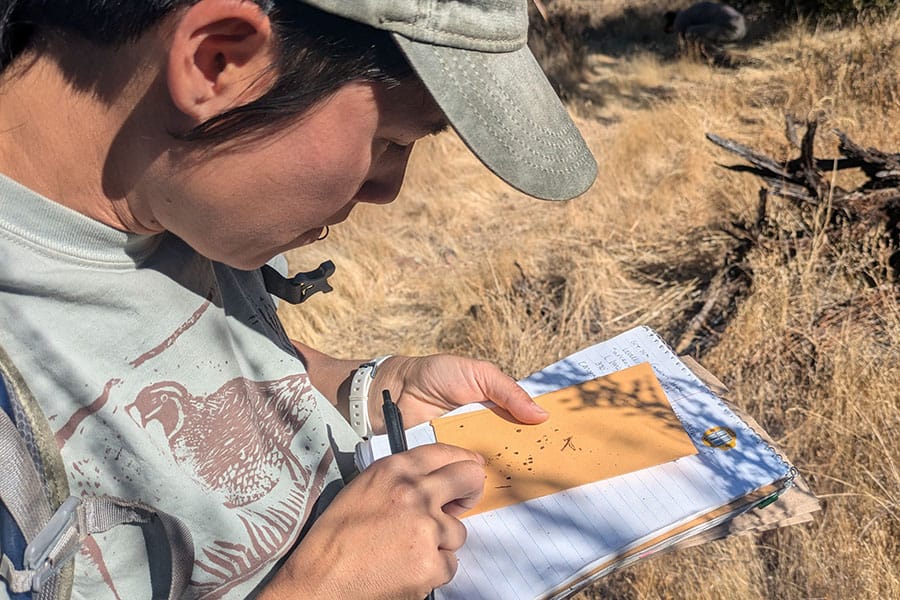
The 2024-2025 school year brought us two high school interns who have been an essential part of setting up the foundations of this project at the three farm sites. It is so important to offer career opportunities to high school students so that they can gain experience for their next steps into adulthood and make informed choices about their future. Quail Springs and Santa Barbara Botanic Garden could not have accomplished so much in such a short amount of time without the help of these interns.
Each farm testing plot was set up uniquely to align with the farmer’s needs and space available, so each farm site is under different conditions of how we prepared it, set it up, and continue to make adjustments to plant and seed native plants.
The education we hope to foster in the Cuyama Elementary School is going to be custom designed curricula from SBBG, with the goal to inspire young students on subjects of ecology and conservation. The lessons are being created for K-8 grades, and staff here at Quail Springs will be in the classrooms in person to help deliver the lessons and make the connections of what’s being taught and how it relates to the world around them.
Now that we are gaining momentum in keeping this work going, stay tuned for more details and what we are up to!